Here's an uncomfortable experiment. Take the chapter you studied last week — the one you highlighted, summarized, and felt good about — close the book, and write down everything you remember. For most students the page stays embarrassingly empty. Not because they studied badly, but because they studied in a way that never asked their memory to do any work.
Active recall and spaced repetition are the two techniques with the strongest evidence base in all of learning science, and they fix exactly this. Used together, they are the closest thing studying has to a cheat code — except the mechanism is entirely mundane: memory strengthens when you retrieve, and retrieval works best on a schedule.
What Is Active Recall?
Active recall (researchers call it retrieval practice or the testing effect) means pulling information out of your memory instead of putting it in front of your eyes. Answering a question, writing what you remember on a blank page, explaining a concept aloud — all retrieval. Re-reading, highlighting, watching lectures again — none of it is.
The distinction matters because retrieval is not just measurement — it's the intervention itself. Every successful (and even unsuccessful) attempt to remember something physically strengthens the memory trace. In controlled studies, students who practiced retrieval consistently outperformed students who spent the same time re-studying, often by dramatic margins — and the advantage grew the longer the delay before the final test. In the classic experiment by Roediger and Karpicke (2006), re-studying won on a test five minutes later, but one week later the students who had tested themselves remembered substantially more — even though the re-readers were more confident. Karpicke and Blunt (2011) later showed that a single retrieval session beat even elaborate concept mapping on both factual and inference questions.
The catch: recall feels worse than re-reading. Retrieval is effortful and exposes what you don't know, while re-reading flows smoothly and feels like mastery. Cognitive scientists call that misleading smoothness the fluency illusion (Bjork, Dunlosky & Kornell, 2013). If your study method feels comfortable, it's probably not working.
What Is Spaced Repetition?
Spaced repetition answers the question active recall raises: when should you retrieve?
In the 1880s, Hermann Ebbinghaus mapped what he called the forgetting curve: memory for new material collapses fast — most of it within days — unless it's refreshed. (A 2015 replication of his experiment found the same shape, with the steepest drop inside the first 24 hours.) But each successful refresh flattens the curve. Review a fact just as you're about to forget it, and it survives much longer before the next review is needed.
That produces the characteristic expanding schedule: review after roughly a day, then a few days, then a week, then weeks. Each review takes seconds if it's a retrieval attempt, which is why the two techniques belong together: spacing decides the calendar, recall is what you do on each date.
How to Use Active Recall and Spaced Repetition: A Practical System
Step 1 — Turn your material into questions
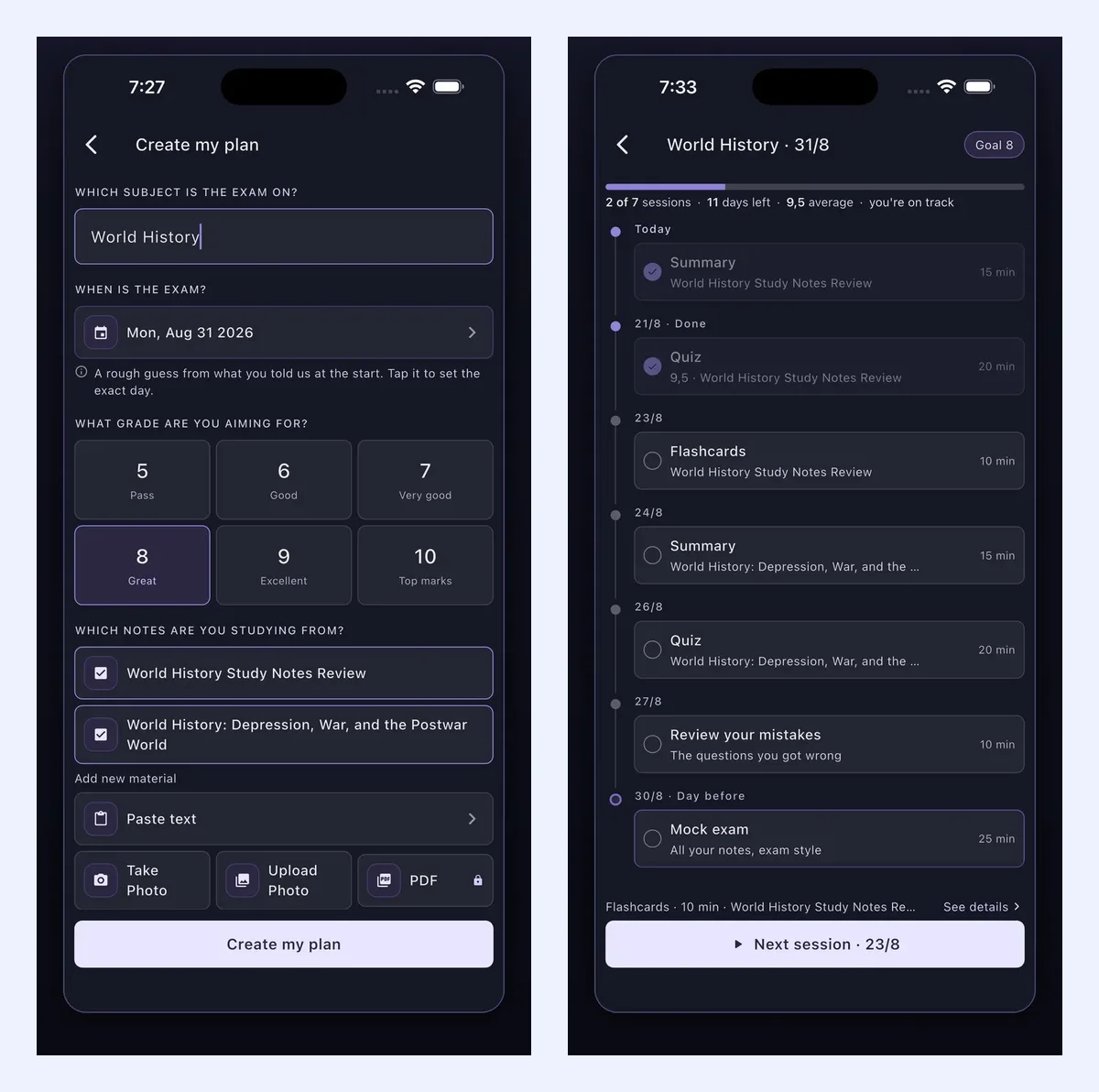
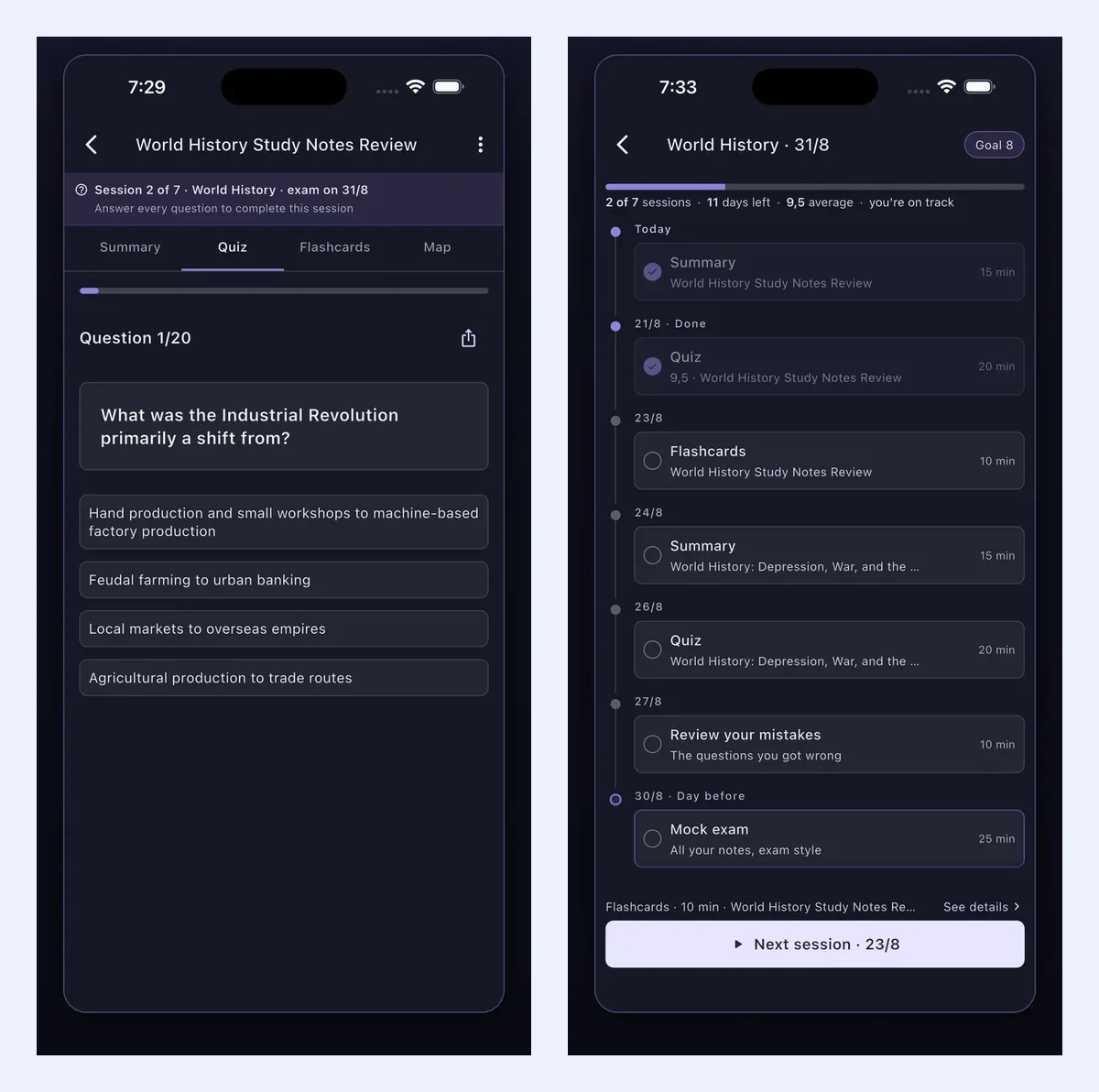
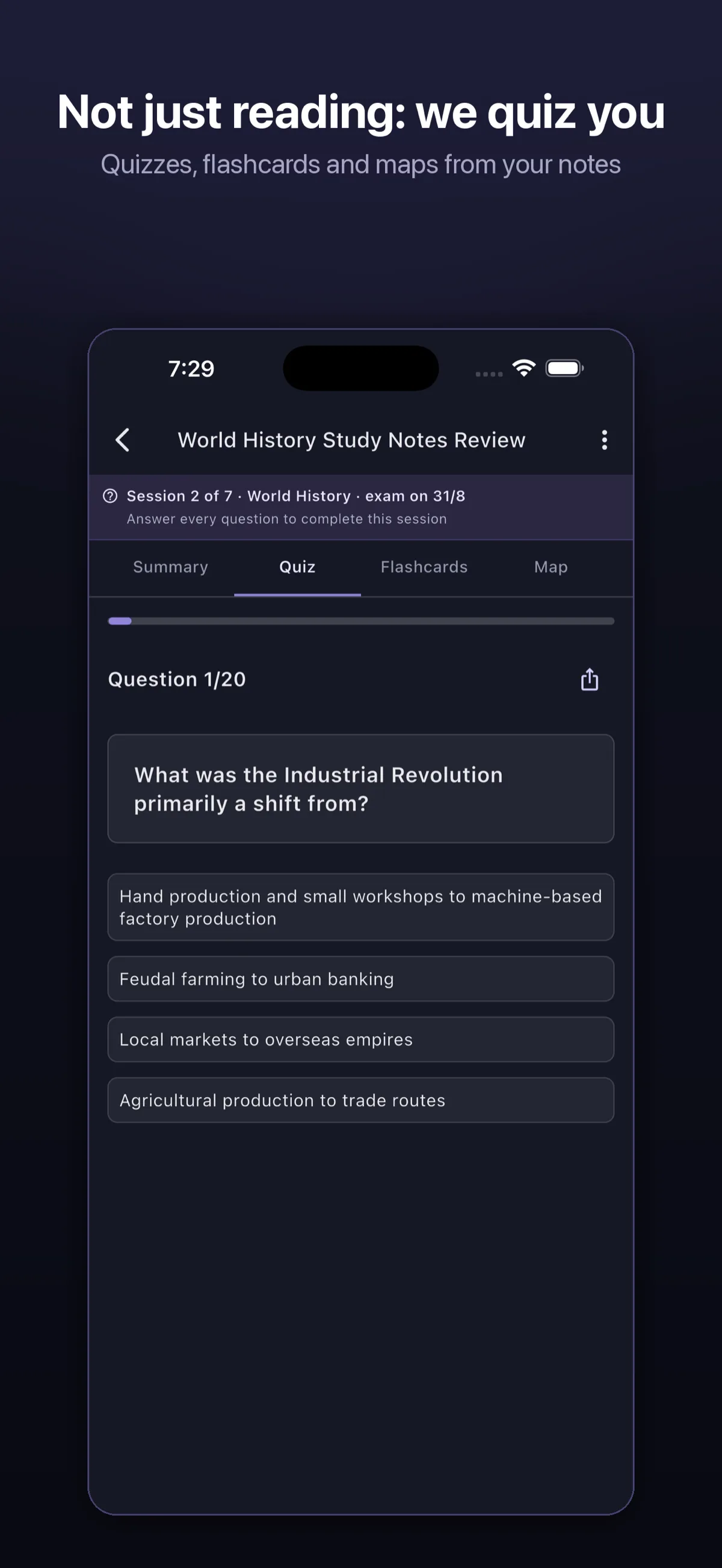
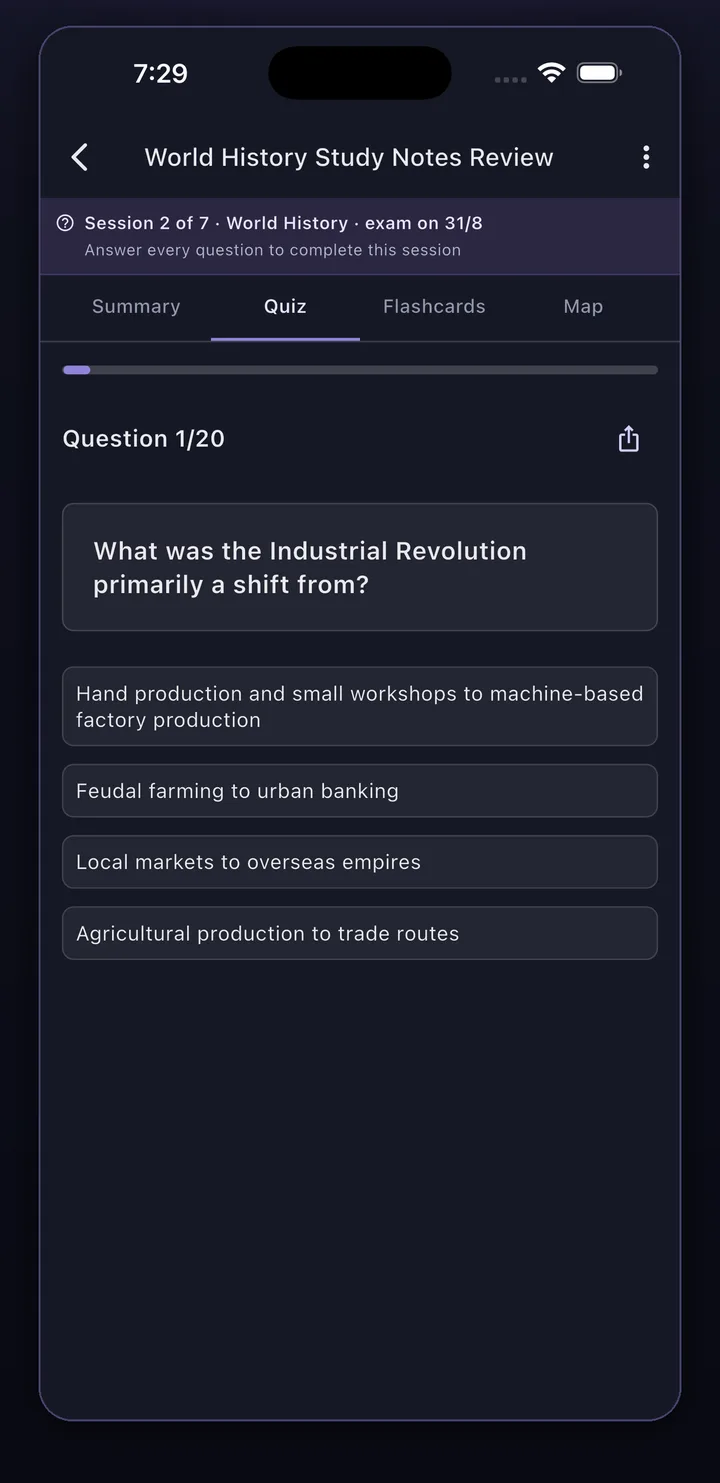
Retrieval needs prompts. After each lecture or reading, convert the content into flashcards (for facts and definitions) and quiz questions (for reasoning and application). This is the tedious step where most students give up — which is why it's worth automating. Synt turns your notes, PDFs, or photos into summaries and generates flashcards and practice quizzes from them directly, so the question bank builds itself while the material is still fresh.
Step 2 — Schedule expanding reviews
A simple schedule that captures most of the benefit without software-grade precision:
- Same day: one quick retrieval pass on new material (minutes, not hours).
- Day 2–3: second pass. Anything you miss goes back to the start of the ladder.
- Day 7: third pass, mixed together with older topics.
- Every 2–3 weeks after: maintenance passes until the exam.
The exact numbers matter far less than the shape: increasing gaps, forgiving resets. Missed a day? Just continue — an imperfect spaced schedule still beats a perfect cramming session.
Step 3 — Retrieve, then check — in that order
Always attempt the answer before looking. Struggling for ten seconds and getting it wrong, then seeing the answer, builds more memory than reading the answer immediately. Wrong answers aren't failures; they're the moments the technique is working hardest.
Step 4 — Close the loop on what retrieval exposes
When you repeatedly miss the same card, the problem is usually understanding, not memory. That's the signal to switch tools: run a Feynman Technique cycle on the concept, or restructure your notes around questions with the Cornell note-taking system, which builds recall prompts into the page layout itself.
Why Does This Beat Re-Reading by So Much?
Because the two methods attack the two halves of the actual problem. Learning fails in two ways: the memory was never encoded strongly (passive input), or it was encoded and then decayed (no returns). Active recall fixes the first — effortful retrieval builds strong traces. Spaced repetition fixes the second — scheduled returns catch memories before they dissolve; a meta-analysis of 317 experiments (Cepeda et al., 2006) found that spaced study reliably beats the same time spent in one block, with the optimal gap growing as the test gets further away. Re-reading addresses neither; it just re-runs the input phase and renews the illusion of knowing.
There's also a compounding effect that's easy to miss: retrieval practice makes future learning faster. A memory that has survived several spaced retrievals becomes a stable anchor that new material can attach to. Students who study this way aren't just remembering more — they're building a structure that makes the next chapter cheaper to learn.
Common Mistakes With Active Recall and Spaced Repetition
Making cards you never review. A flashcard deck is not a trophy. If creating materials eats the time reviewing them should get, automate the creation — that's precisely the job Synt does.
Reviewing everything every day. That's not spacing, it's grinding. Equal-interval review wastes time on what you already know and starves what you're forgetting.
Flipping cards too fast. Reading the question and immediately checking the answer converts retrieval back into recognition. The struggle is the point.
Only using flashcards. Facts fit on cards; reasoning doesn't. Mix in full practice questions and blank-page recall ("write everything you know about X") to cover the formats exams actually use.
Starting the week before the exam. Spacing needs runway. Two weeks of spaced retrieval beats two months of re-reading, but it can't be compressed into two days. For how these techniques slot into a complete revision timeline, see our week-by-week exam study plan.
Active Recall and Spaced Repetition: Start Tonight
You don't need an elaborate system to begin. Tonight, take today's notes, generate ten questions from them, and answer them cold. Do it again on Thursday. That's the entire method in miniature — and it's already more effective than another highlighting pass.
Want the setup done in seconds? Synt summarizes your lecture notes and PDFs, then turns them into the flashcards and quizzes your spaced repetition schedule runs on — free in your browser, on iOS and on Android.