You open your textbook. You read the first sentence. Then you check your phone. Then you re-read the first sentence. Thirty minutes pass and somehow you've covered half a paragraph.
Sound familiar? You're not lazy — your brain is just fighting a battle it wasn't designed to win alone. Modern life is engineered for distraction, and learning how to focus while studying asks something genuinely hard of your mind: sustained, voluntary attention on something that isn't immediately rewarding. The good news is that focus is a skill, not a fixed trait. And like any skill, the right techniques make it dramatically easier to develop.
Here are eight concentration techniques that actually work — grounded in what we know about how the brain learns.
1. Set a Clear, Specific Study Goal Before You Start
"Study biology" is not a plan. "Finish reading chapter 7 and write a 5-point summary of cellular respiration" is.
When your brain doesn't know what the endpoint looks like, it stays in a low-grade state of ambiguity — which feels a lot like distraction. Defining a concrete deliverable before you sit down gives your attention something to lock onto. It also makes it much easier to notice when you've drifted.
Before each session, write down one sentence: What will I have completed when this session ends? That single habit removes more friction than almost anything else on this list.
2. Work in Focused Blocks, Not Marathon Sessions
The Pomodoro Technique, created by Francesco Cirillo — 25 minutes of focused work, 5-minute break, repeat — has earned its reputation for a reason. Your brain isn't built for three-hour unbroken concentration sprints. Cognitive performance starts declining well before you notice it consciously.
But the exact timing matters less than the principle: decide in advance when you'll rest. When your brain knows a break is coming, it's far more willing to stay on task until then. Trying to study indefinitely, by contrast, keeps part of your mind constantly calculating whether you should stop.
Experiment with 25, 45, or 52-minute blocks and find what works for your material and your attention span. The structure matters more than the number.
3. Remove Friction From Starting
Procrastination often isn't about laziness — it's about activation energy. The harder it is to begin, the more your brain resists.
Make starting as easy as possible:
- Keep your study materials already open or set up from the day before
- Have a designated spot where studying is all you do (your brain will start associating that space with focus)
- Use a simple ritual to signal the start of a session — making tea, putting on headphones, closing all browser tabs
The goal is to make "starting" feel like flipping a switch rather than climbing a hill.
4. Treat Your Phone Like the Distraction It Actually Is
This one isn't subtle. The average person unlocks their phone 96 times a day. A single notification is enough to break a flow state — and interruptions are never free: in a study of interrupted work, Gloria Mark and colleagues found that people compensate by working faster, but pay for it with more stress, more frustration and more mental effort. Nor is "just a quick check" between paragraphs harmless: a Stanford study found that heavy media multitaskers were worse at filtering out irrelevant information and at switching between tasks (Ophir, Nass & Wagner, 2009).
During study blocks:
- Put your phone in another room (not face-down on your desk — your willpower is finite)
- Use apps like Freedom, Cold Turkey, or Focus Mode to block distracting sites
- Tell people you'll be unavailable for a set window
You're not punishing yourself. You're protecting the one resource that makes studying actually work: your attention.
5. Use Background Sound Strategically
Complete silence works beautifully for some people. For others, it's deafening. If you find yourself drawn to cafes or libraries, there's a reason — low-level ambient noise (around 70 decibels) has been shown to modestly improve creative and analytical performance for many people.
Playlists designed for focus — lo-fi beats, classical music without lyrics, brown noise, binaural beats — can help create a consistent auditory environment that your brain learns to associate with work. The key word is consistent. Familiarity reduces novelty, which reduces distraction.
Lyrics in your native language, on the other hand, almost universally hurt reading comprehension. Your brain can't process two streams of words at once.
6. Reduce Cognitive Load With Better Notes
Here's something counterintuitive: struggling to focus is sometimes a signal that you're asking your working memory to hold too much at once.
Working memory is limited — most people can hold four to seven chunks of information at a time. When you're reading dense material without organizing it, your brain is trying to track dozens of half-formed ideas simultaneously. No wonder it bails.
Active note-taking (summarizing in your own words, pulling out key ideas, creating structure from chaos) offloads cognitive burden onto paper or screen. This frees up your working memory to actually engage with what you're reading rather than just hanging on.
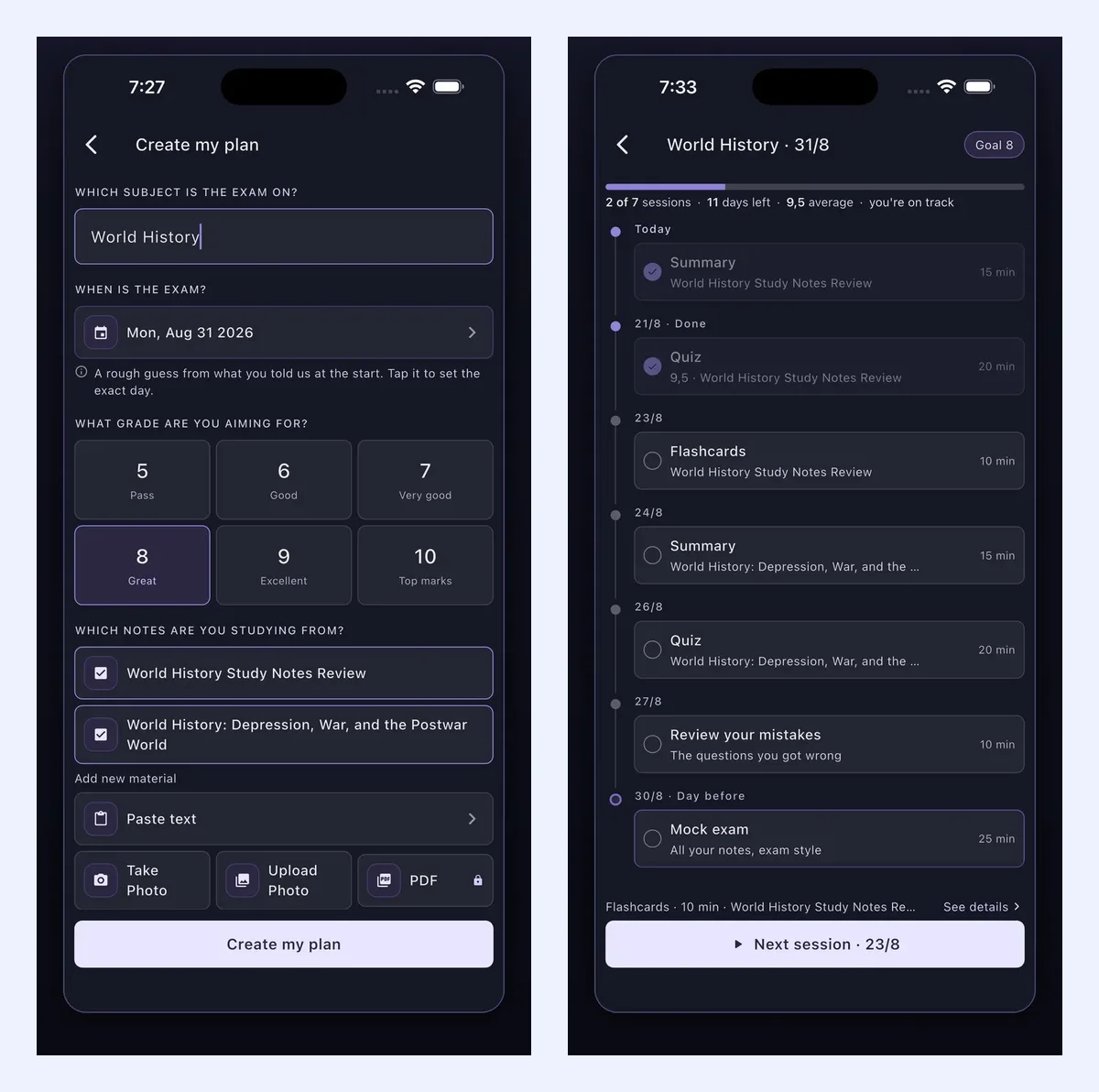
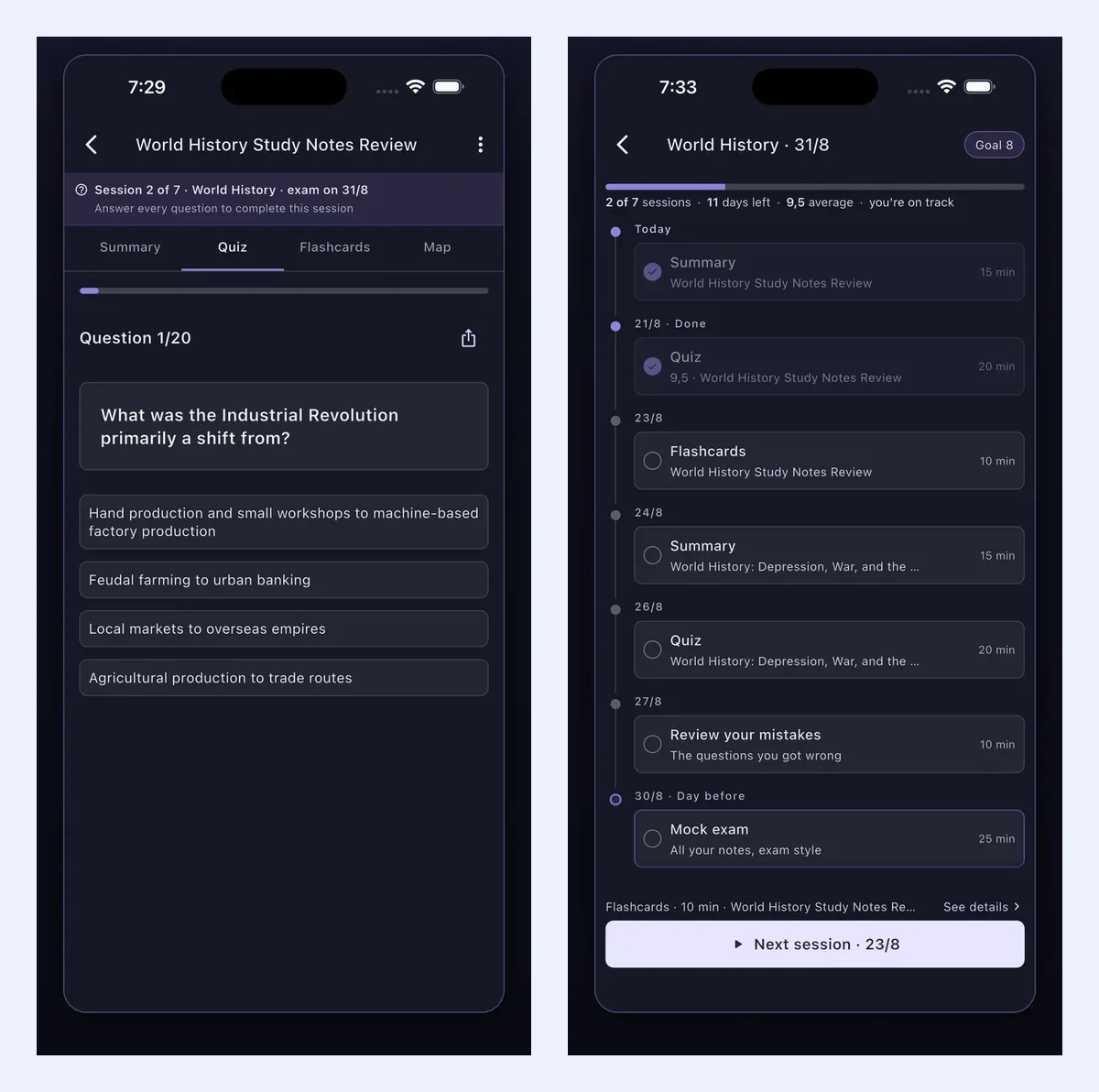
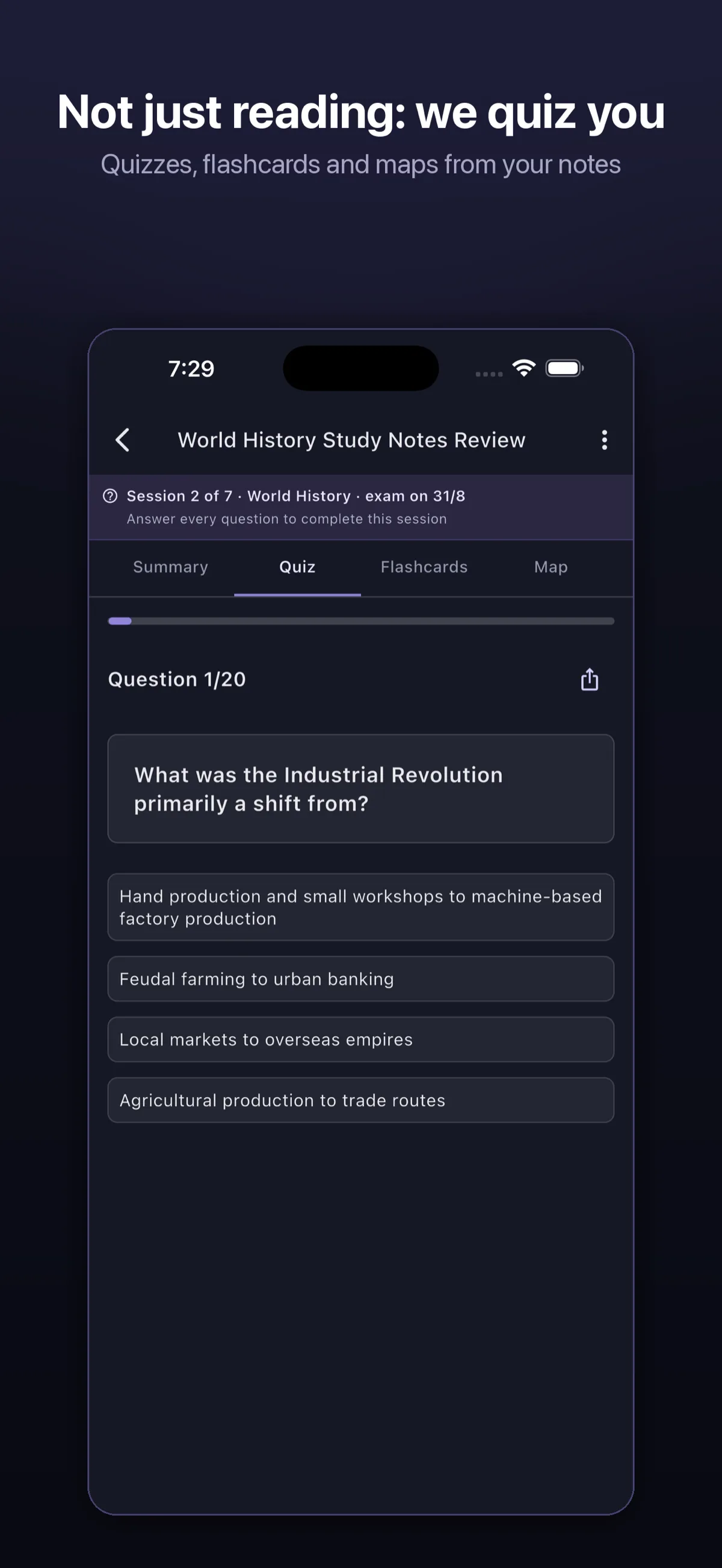
If you're studying from long documents or lecture slides, using an AI summarizer like Synt to extract the key concepts first can help enormously — it gives your brain a map before you walk into the territory. See how taking notes with AI can further cut that cognitive load.
7. Match Your Hardest Work to Your Sharpest Hours
You probably already know whether you're a morning person or a night owl. What you may not fully appreciate is how dramatic the difference is in your actual cognitive output at different times of day.
Research on circadian rhythms and cognitive performance consistently shows that most people have a 2-4 hour window of peak mental alertness — typically in the mid-morning for early chronotypes, and later in the afternoon or evening for night owls. During that window, abstract thinking, reading comprehension, and retention are all meaningfully better.
Reserve your hardest material — the stuff that requires real concentration — for that window. Use lower-energy hours for admin tasks: making flashcards, reviewing summaries, organizing notes.
8. End Each Session With a Brief Review
The last five minutes of a study session are more valuable than most people realize. Instead of closing your book the moment the timer goes off, spend a few minutes doing a quick mental recall: What were the three main ideas I covered today? What's still fuzzy?
This practice does two things. First, it consolidates what you just learned — the act of retrieval immediately after study strengthens memory traces significantly (this is the testing effect documented by Roediger and Karpicke, 2006). Second, it primes your brain for the next session. When you know you'll need to recall something soon, your brain treats the information as worth keeping.
It also makes it much easier to pick up where you left off. You won't waste the first ten minutes of your next session trying to remember where you were.
The Bigger Picture
Focus while studying isn't about willpower. It's about design — removing the conditions that make distraction easy and creating the conditions that make concentration natural. None of these techniques require you to be a different kind of person than you are right now.
Start with one. Pick whichever resonates most, apply it to your next study session, and notice what changes. Building genuine focus is incremental — a slightly better session today compounds into dramatically better learning over a semester. If you want to go deeper on active learning strategies, the Feynman Technique is a powerful companion method for turning focused reading into lasting understanding.
And when the material itself feels overwhelming? Sometimes the bottleneck isn't attention — it's clarity. Synt's AI study tools can help you cut through dense readings and long lecture notes, generating clean summaries and key concept breakdowns so your focused time goes toward understanding, not just processing. Try it on your next tough chapter.