Between lectures, assignments, readings, and exams, being a student in 2026 means dealing with more information than ever. The good news? AI has finally caught up — and the right tools can genuinely cut your study time in half. Here's a breakdown of the best AI tools for students right now, and what each one is actually useful for.
What makes a good AI study tool?
Not every AI tool is worth your time. The best ones for students share a few traits:
- They save real time — not just seconds, but hours per week
- They're easy to use — no technical setup required
- They work with your existing materials — PDFs, notes, slides, articles
- They improve understanding, not just speed
With that in mind, here are the categories and tools worth knowing.
AI tools for summarizing and reading
Synt
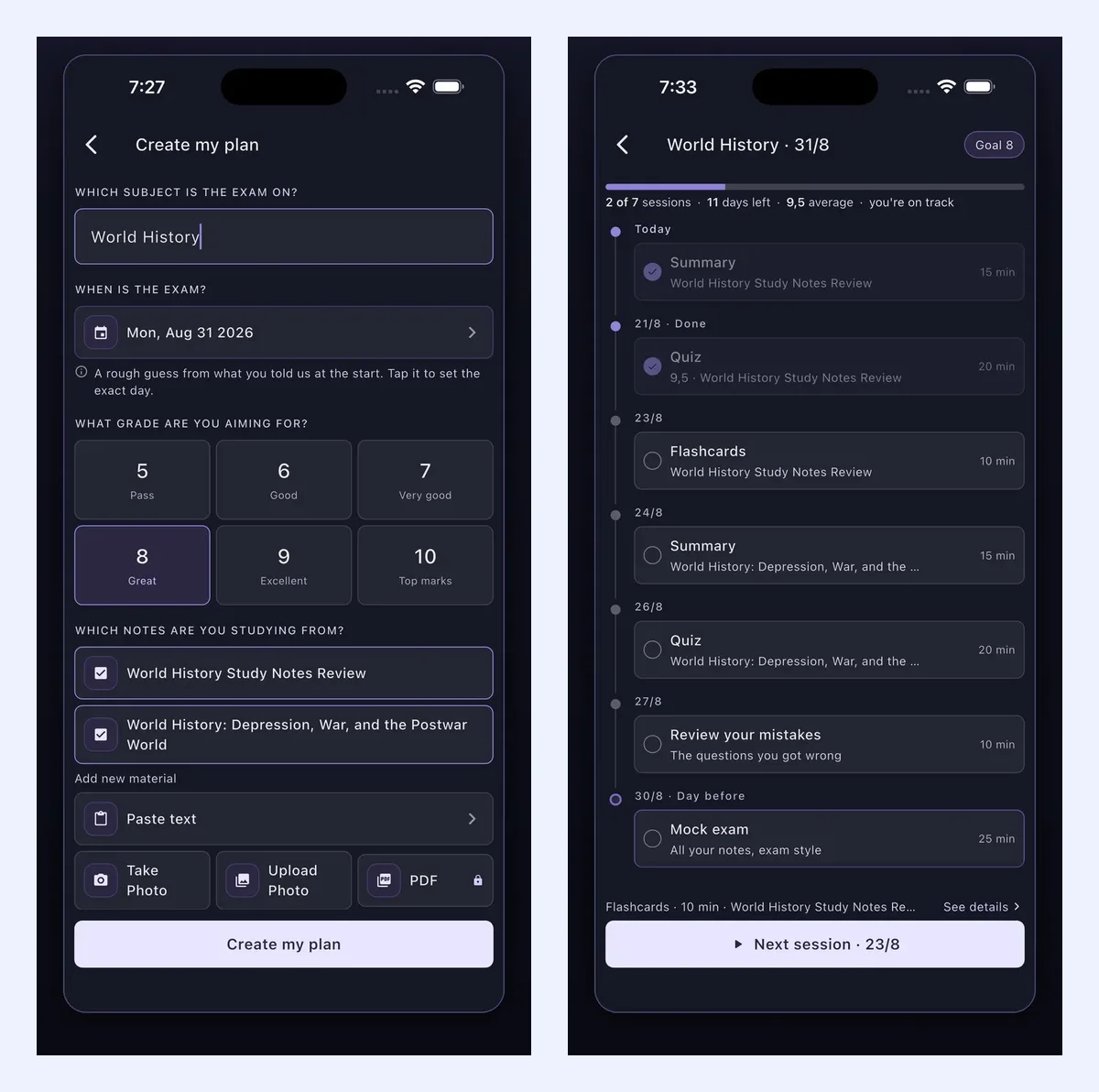
If you regularly deal with long PDFs, lecture notes, or articles, Synt is one of the most useful tools you can have. Upload any document — PDF, image, or plain text — and get a structured summary in seconds. You can choose between a short overview, bullet points, or a section-by-section breakdown depending on what you need.
Best for: Summarizing textbooks, research papers, lecture notes, and online articles.
Perplexity AI
A search engine powered by AI that gives you sourced, direct answers instead of a list of links. Useful for quick research and getting background context on a topic.
Best for: Quick research, understanding unfamiliar concepts, getting references.
AI tools for writing and structuring ideas
ChatGPT
Still one of the most versatile tools out there. Students use it to draft essays, outline arguments, explain complex topics, and get feedback on writing.
Best for: Essay drafts, brainstorming, explaining difficult concepts in simple terms.
Notion AI
If you already use Notion for notes and project planning, the built-in AI lets you summarize pages, generate outlines, and turn rough notes into structured documents.
Best for: Organizing notes, turning messy ideas into structured summaries, project planning.
AI tools for math and science
Wolfram Alpha
The go-to tool for solving equations, understanding mathematical concepts, and working through chemistry or physics problems step by step.
Best for: Math, physics, chemistry, statistics.
Photomath
Point your camera at a math problem and get a step-by-step solution. Simple, fast, and genuinely helpful for understanding where you went wrong.
Best for: Algebra, calculus, arithmetic — especially useful for self-study.
AI tools for flashcards and memory
Anki with AI plugins
Anki's spaced repetition system is already one of the most effective study methods known: in the largest review of learning techniques to date, Dunlosky and colleagues (2013) rated practice testing and distributed practice as the only two "high utility" techniques of the ten they examined. Combine it with AI plugins that auto-generate flashcards from your notes or uploaded PDFs and you have a powerful memory tool.
Best for: Memorizing vocabulary, formulas, historical dates, medical concepts.
Quizlet
Quizlet now includes AI features that generate flashcard sets from pasted text or uploaded documents. It also creates practice tests and learning games.
Best for: Exam preparation, vocabulary learning, quick review sessions.
How to combine these tools effectively
The biggest mistake students make is trying to use every tool at once. A simpler approach works better:
- Before a study session: Use Synt to get a summary of your reading material so you know what matters
- During study: Take notes in Notion or your preferred app, use ChatGPT to clarify confusing points
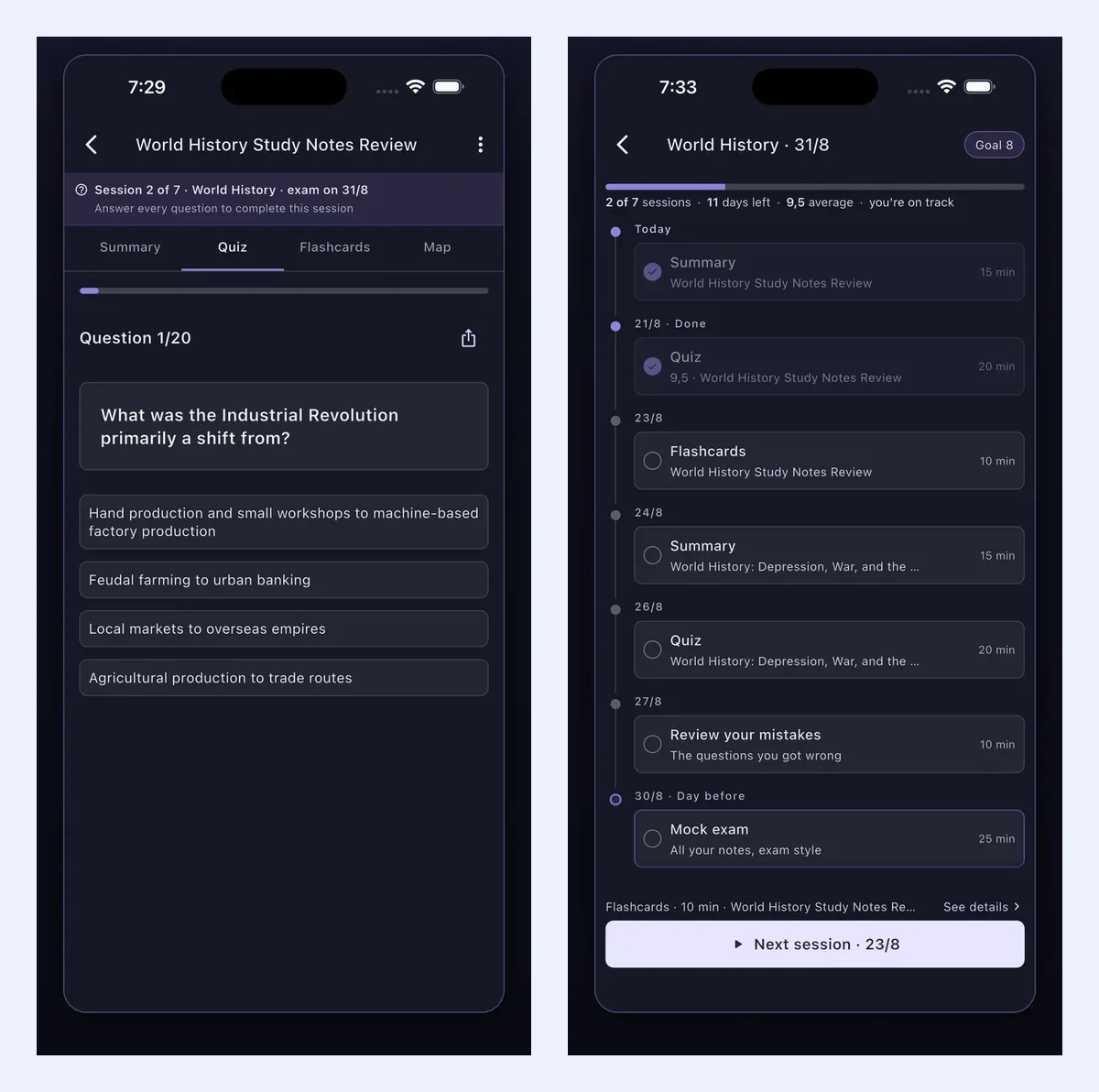
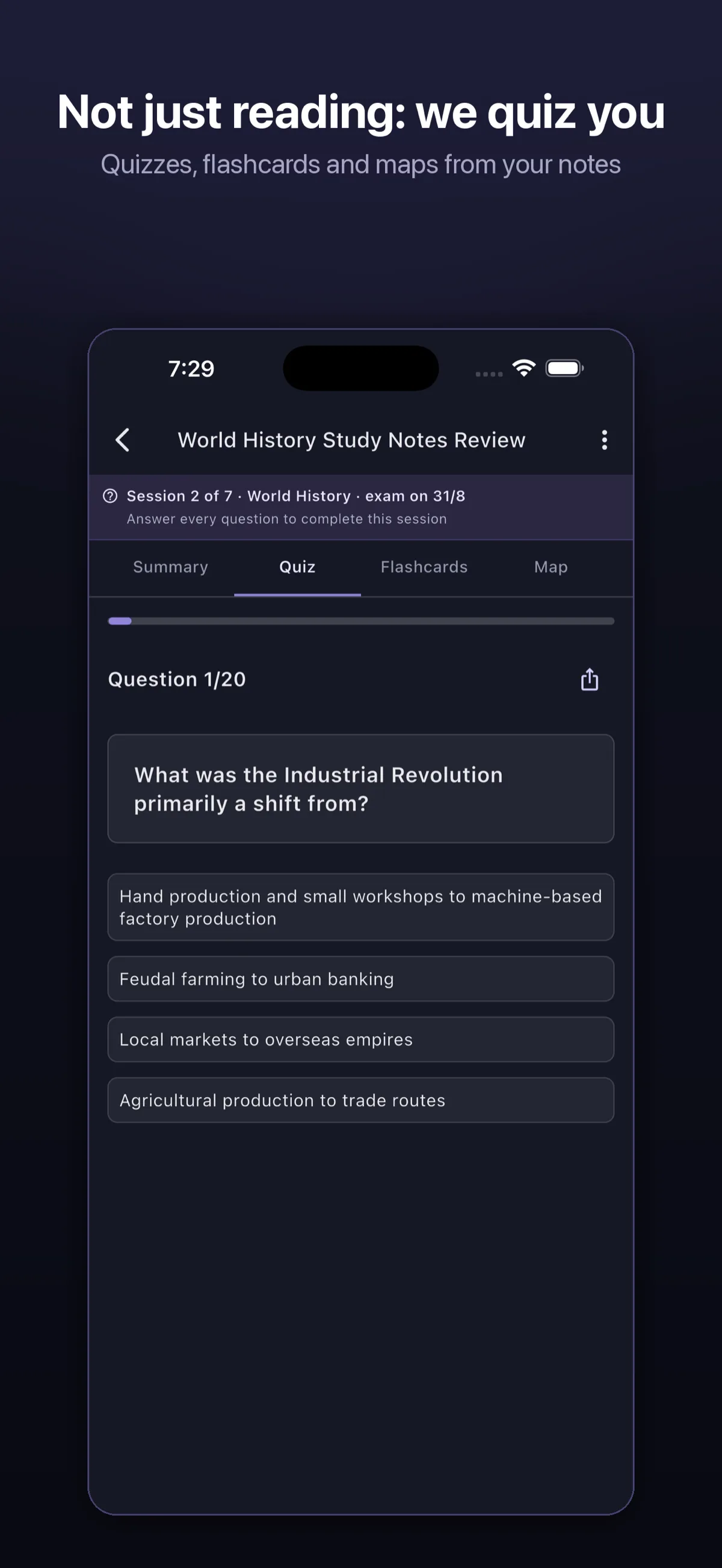
- After studying: Use Anki or Quizlet to turn your notes into review material — or let Synt’s Flashcard Maker build them straight from the summary
This workflow means you spend less time reading everything twice and more time actually learning.
What AI tools can't do
AI tools are powerful, but they have limits worth knowing:
- They can miss nuance in highly complex or technical texts
- They can't replace the deep understanding that comes from active reading
- Over-relying on AI summaries without engaging with the material can hurt retention — reading is not remembering: students who only reread a text feel more confident but recall less a week later than those who test themselves on it (Roediger & Karpicke, 2006)
Use them as a starting point, not a replacement for thinking. That's also the line taken by UNESCO's guidance on generative AI in education, which calls for a human-centred use of these tools in the classroom.
Conclusion
The best AI tools for students in 2026 aren't about cutting corners — they're about making your study time more effective. Whether you're summarizing a 50-page paper, preparing for an exam, or trying to understand a topic faster, there's a tool for it.
Start with what you need most. If it's cutting through long readings, try Synt — upload your first document and see the difference.